











CONFERENCE & WORKSHOP NEWS
A Fantastic NOLTA in Vancouver, Canada
The 2007 International Symposium on Nonlinear Theory and its Applications (NOLTA 2007) was held during September 16-19, 2007, at the Simon Fraser University Harbour Centre, Vancouver, Canada.
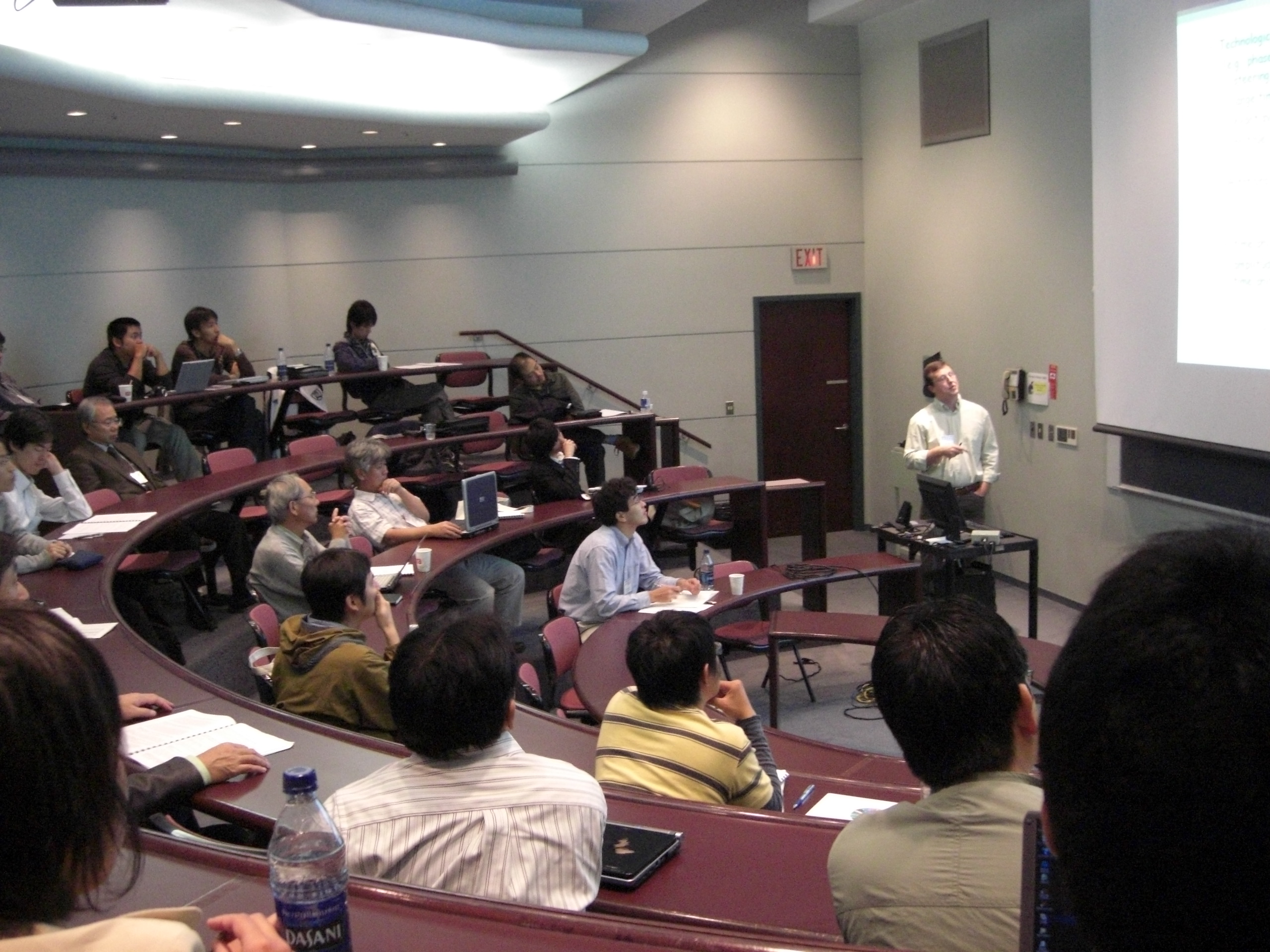 The objective of the symposium is to provide a forum for exchange to the latest results related to nonlinear theory and its applications. The symposium technical program covers many major and emerging areas in the nonlinear theory and electronic circuits. The Technical Program Committee selected 140 papers to be presented in 35 technical sessions including 11 special sessions.
 The program was highlighted by two plenary talks of Prof. Anthony Arrott (Simon Fraser University) and Prof. Toshiyuki Ogawa (Osaka University).
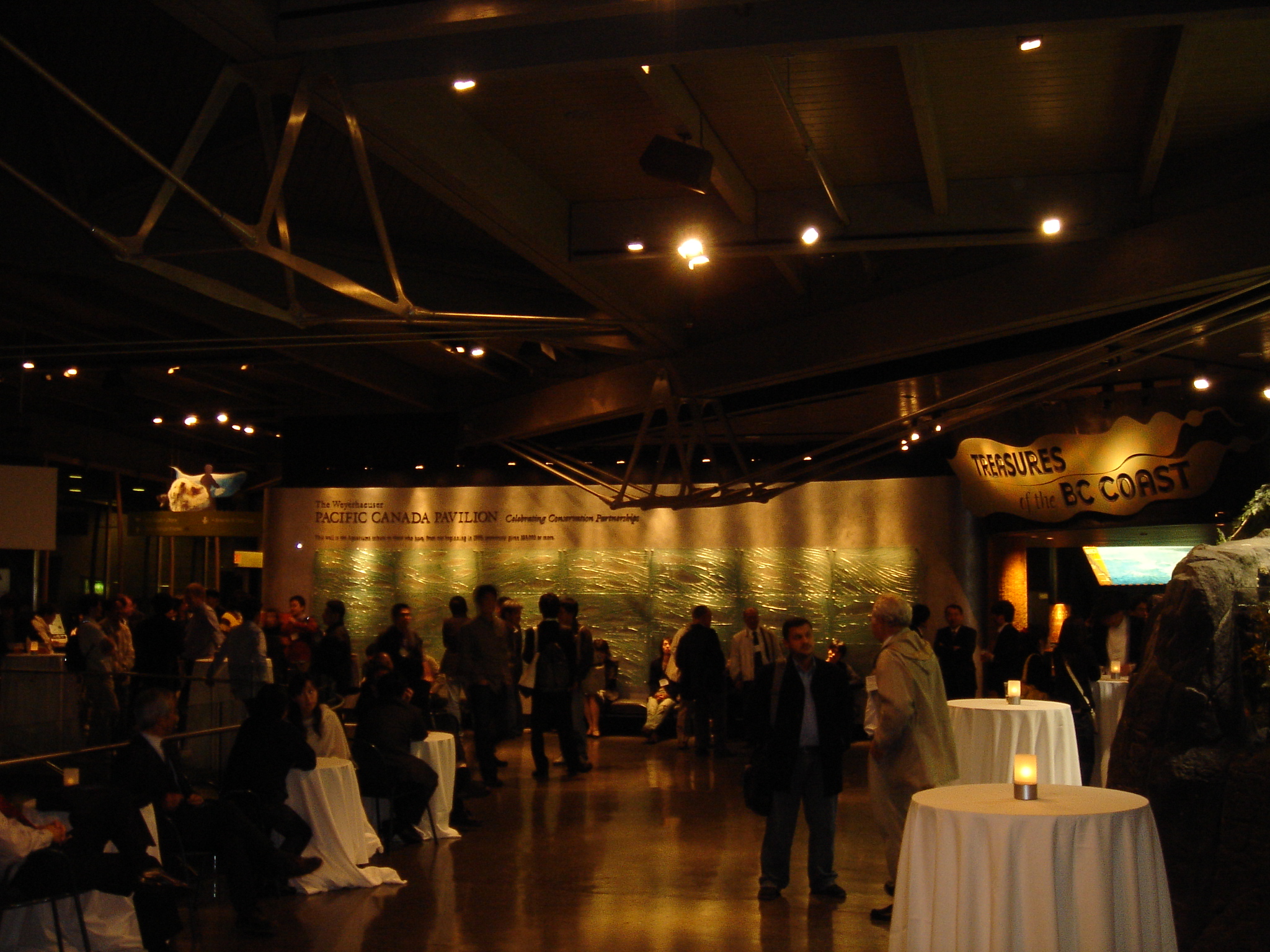
The conference banquet was held at the Vancouver Aquarium (http://www.vanaqua.org/). People enjoyed dinner with friends of sea including sea otter, dolphin, and seal. They also learned various real nonlinear phenomena in sea creatures; pattern formation appeared on their colorful skins, complex gait patterns of crustacean (lobsters, crabs, and shrimps), and group dynamics of sardine. It was really fantastic!!
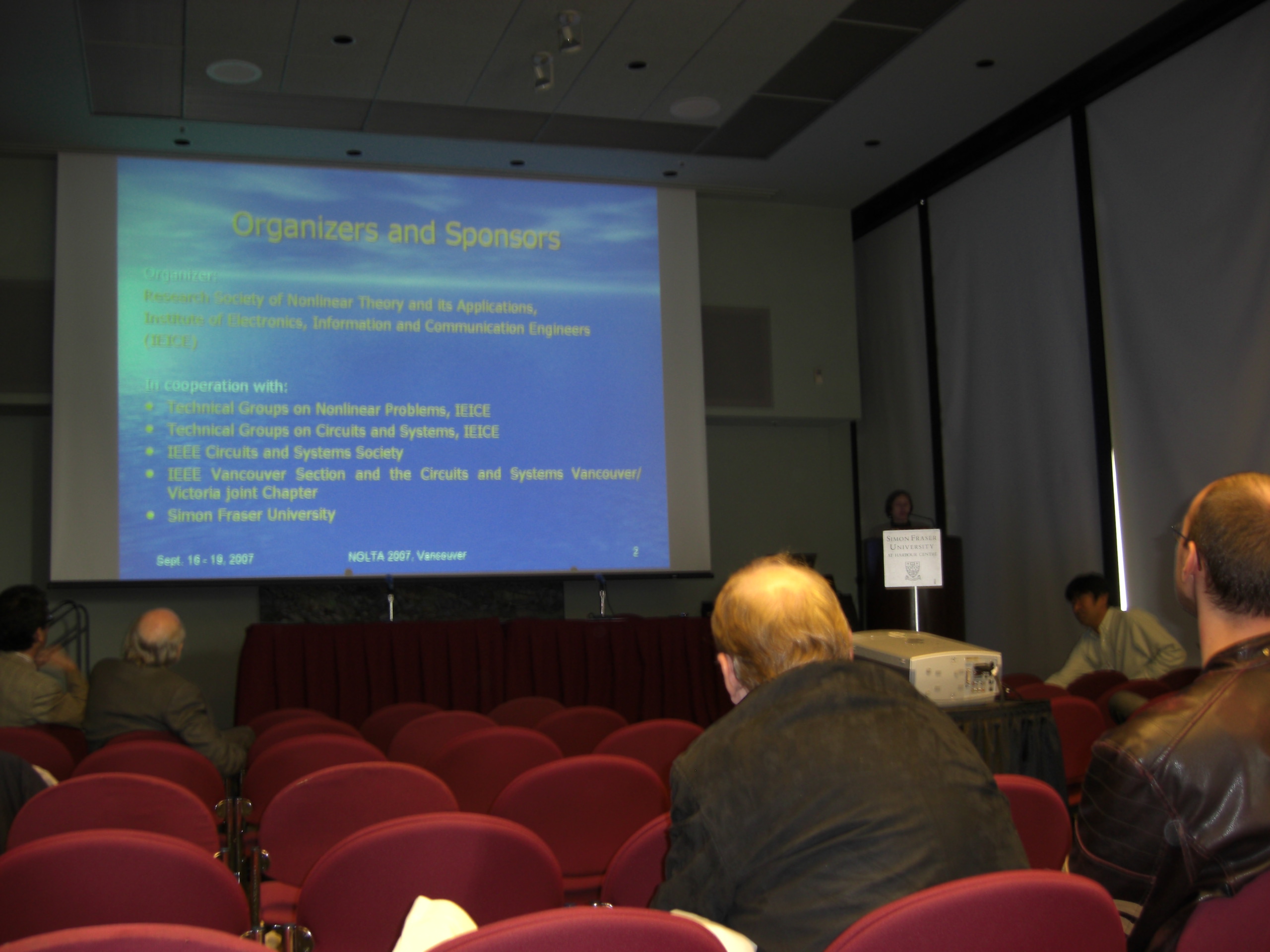 I interviewed one of the General Co-Chairs of NOLTA 2007, Prof. Ljiljana Trajkovic of Simon Fraser University.
Q1. What did you enjoy most in organizing NOLTA 2007?
A1. I very much enjoyed being part of the NOLTA organizing team and attending NOLTA 2007. It was, as always, very nice to see again my colleague and friends.
However, above all, NOLTA was a unique opportunity to meet graduate students and share their feelings of enthusiasm and motivation when helping with local arrangements, attending daily to the registration desk and various duties at the symposium venue, and participating in the technical program and presenting their research papers. It was also very nice to enjoy with them NOLTA 2007 social events and the banquet at the Vancouver Aquarium.
 Q2. What are your overall impressions of NOLTA 2007?
A2. NOLTA 2007 had smaller number of submitted papers and attendance than previous years. We attributed that to NDES held in July 2007 and ECCTD held in August 2007. All three meetings attract a similar group of researchers and many of them had to make a difficult choice which event to attend this summer. In spite of competing events, NOLTA 2007 was a great success, having approximately 200 attendees. The Technical Program was very well organized and included special sessions, work-in-progress sessions, and regular papers.
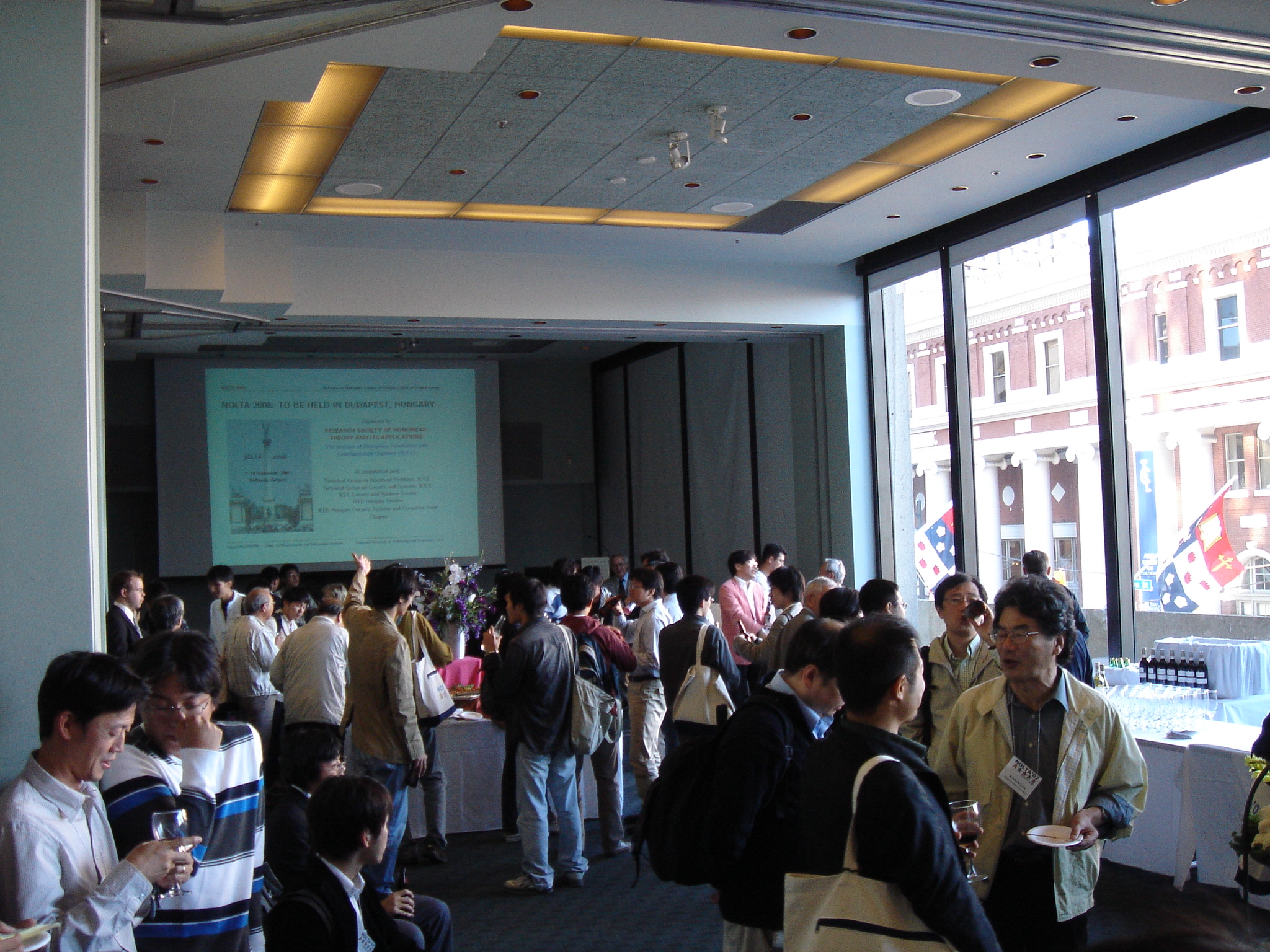 The symposium sessions and the welcome and farewell receptions were held at the Simon Fraser University Harbour Centre, conveniently located in the heart of downtown Vancouver. I found NOLTA 2007 to be a very fine symposium offering stimulating technical program and productive interactions with the participants. Even the Vancouver weather cooperated, offering sunshine and beautiful views to the symposium attendees.
The next NOLTA is scheduled to be held in Budapest, Hungary, in September 2008.










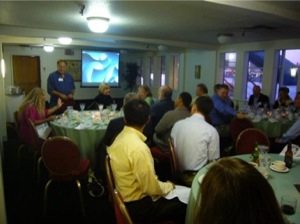


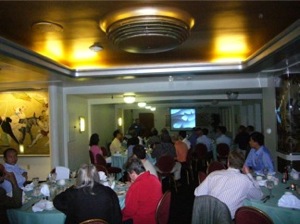



During the Friday lunch, a special presentation was given by Prof. Drew Endy of MIT on “Technologies for Engineering Biology”, in memory of the late EDA icon, Dr. Richard Newton, former Dean of Engineering of UC Berkeley, who in recent years had become a powerful advocate of synthetic biology. Prof. Endy described a level of genetic engineering and manipulation which sounded like science fiction to the audience, yet had already been achieved. The biological systems he described are based on living bacteria which can be manipulated into producing chemicals, or into making tagged chemical signals which trigger or inhibit other genome expression mechanisms. Taken together, one can see a new style of engineering based on living system expression of proteins and enzymes that can be viewed as a robust platform for design.
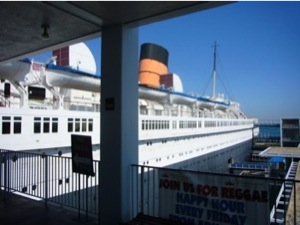
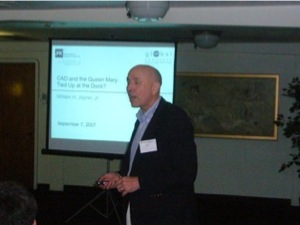
Last but not least, Dr. Bill Joyner, Director of Computer Aided Design/Test from Semiconductor Research Corporations, gave a very enlightening dinner speech. By beginning with some analogy between CAD and the Queen Mary, such as “Tied Up at the Dock? A Cruise to Nowhere? Stationary Since 1967? Powerful but Hard to Turn? Same Components as in 1936? Engines Stopped for 40 Years?”, Dr. Joyner’s talk covered a lot of wisdom and food for thoughts on how semiconductor and EDA industries have evolved and where to head for.
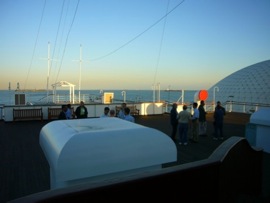
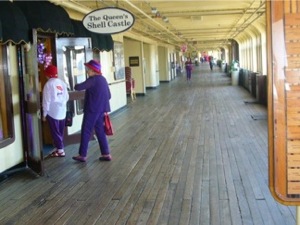
The decks of the Queen Mary arena were a perfect location for open discussions, made especially lively by the free flow of beer and wine. It was fun just touring her decks and ballrooms, lounging on the fantail, savoring how the POSH people lived (POSH = Port Out, Starboard Home, the cabin location choice if you were a British Empire diplomat being posted to India). Being engineers, attendees wanted to see her engines which pushed the massive ship at 40 knots, outrunning submarines and even her escort warships, but the engine room was being decorated as a massive Halloween fun house, so instead some pretended to be anti-aircraft gunners in the turrets remaining from the war.
Further information about CANDE Workshop can be found at http://www.cande.net/. CANDE will hold its next member meeting at ICCAD 2007 (www.iccad.com) and make plans for next year’s workshop
David Pan, Program Chair of the 2007 CANDE Workshop, University of Texas at Austin (Email: dpan@ece.utexas.edu).
